Source 3 Arm Rotary Sprinkler Nozzle for Garden Irrigation, Lawn Care, and Farm Watering
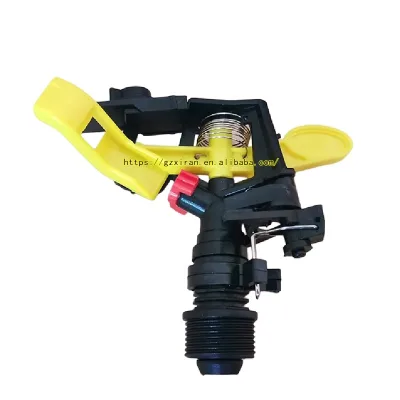
Compare 30 listings for the 3 Arm Rotary Sprinkler Nozzle featuring manual power sources and vortex types. Buyers can evaluate models like FSWP3152 and FSHF2125 with brass or PP materials for garden water irrigation and low-pressure car washing applications.
Key considerations
Products List



Comprehensive Sourcing Guide
Strategic Sourcing Guide for 3 Arm Rotary Sprinkler Nozzles
Understanding Technical Specifications and Variants
When sourcing a 3 Arm Rotary Sprinkler Nozzle, buyers must first distinguish between general irrigation components and specialized fire suppression devices, as the supplied data reveals a complex mix of product attributes under similar search terms. The core keyword implies a mechanical device designed for rotational water distribution, often utilized in agricultural or landscape settings. However, the available product facts indicate that suppliers in the Chinese manufacturing hubs of Zhejiang, Fujian, and Fuzhou offer a wide spectrum of related items, ranging from low-pressure garden irrigation tools to high-performance fire protection systems.
For the specific application of a 3 arm rotary nozzle, the primary technical focus should be on the "Sprinkler Type" and "Power Source." The provided facts list "Vortex" and "Water Curtain" as specific sprinkler types, alongside a "Manual" power source for certain irrigation models and "Pressure" for others. A 3 arm design typically relies on water pressure to generate rotational force, distinguishing it from electric or manual crank-operated systems. Buyers should verify that the specific model, such as those designated by codes like FSWP3152 or FSWP4064, aligns with the intended pressure requirements. The "Standard" field in the data references thread sizes like "1/2" Male" and specific hanging dimensions like "4/7MM," which are critical for ensuring compatibility with existing piping infrastructure.
Material composition is another decisive technical factor. The supply chain data highlights "Brass," "Bronze," "Zinc," and "PP" (Polypropylene) as common materials. For outdoor irrigation applications where durability against UV exposure and corrosion is paramount, brass or bronze components are generally preferred over plastic variants, though PP may be suitable for low-cost, temporary setups. The finishing process, listed as "Nickel or Chrome Plated" or "Polished," directly impacts the longevity of the nozzle in harsh environments. Buyers must confirm whether the surface treatment is sufficient for the specific water quality and environmental conditions of the project site.
Compliance, Certification, and Safety Standards
In the B2B procurement of fluid control devices, compliance is not merely a formality but a critical risk mitigation strategy. The supplied facts explicitly mention certifications such as "UL," "FM," and "CCC." These acronyms represent distinct regulatory frameworks: UL (Underwriters Laboratories) and FM (Factory Mutual) are widely recognized in North America and globally for fire safety and performance reliability, while CCC (China Compulsory Certification) is mandatory for products sold within the Chinese market.
When evaluating a supplier for a 3 Arm Rotary Sprinkler Nozzle, it is essential to determine the intended market of deployment. If the product is destined for fire protection applications, the presence of UL or FM certification is non-negotiable. The data notes that some products are classified as "Fire Sprinkler" with "Alarm Valve" types like "Deluge Valve" or "Diaphragm Type," suggesting a subset of the inventory is engineered for life-safety systems. For these items, the "Sprinkler Installation" type (Pendent or Upright) and the "Alarm Valve Diameter" (e.g., 150mm) must be verified against local building codes.
For irrigation and landscaping applications, the certification requirements may differ, often focusing on material safety and flow efficiency rather than fire suppression ratings. However, the "CCC" certification mentioned in the data serves as a baseline indicator of manufacturing quality control within China. Buyers should request valid certification documents that correspond to the specific model number, such as "zstwc" or "Zst," to ensure the product has undergone the necessary testing protocols. Relying on a supplier's claim of compliance without physical documentation exposes the buyer to significant liability, particularly if the device is used in commercial or industrial settings.
Cost Drivers and Pricing Dynamics
The pricing landscape for rotary sprinkler nozzles is influenced by a combination of material costs, manufacturing complexity, and order volume. The observed price range in the market data spans from $0.05 to $1500 USD, a variance that reflects the diversity of the product catalog rather than a single product line. The lower end of this spectrum likely corresponds to simple, mass-produced plastic irrigation nozzles or basic components, while the upper end encompasses specialized fire suppression systems with complex valve mechanisms and high-grade metal construction.
The "MOQ" (Minimum Order Quantity) range of 1 to 5000 units significantly impacts the unit cost. Suppliers offering an MOQ of 1 are likely targeting sample buyers or small-scale projects, often at a premium per-unit price. Conversely, buyers committing to larger volumes, such as the 5000-unit threshold, can negotiate more favorable pricing structures. The "Lead Time" of 5-10 days mentioned in the data suggests a responsive supply chain for standard items, but complex customizations or large batch productions may extend this window.
Material selection is a primary cost driver. Brass and bronze nozzles, which are listed as available options, incur higher raw material costs compared to PP (polypropylene) or zinc-plated alternatives. Additionally, the finishing process plays a role; chrome plating or nickel plating adds value and cost compared to a "Brass Original" finish. Buyers should analyze the total cost of ownership, considering that a cheaper plastic nozzle may require frequent replacement, whereas a brass unit with a chrome finish offers a longer service life. The "Customization" attribute being "Available" also introduces variable costs, as bespoke thread sizes, flow coefficients, or branding will increase the unit price and potentially the lead time.
Typical Applications and Performance Expectations
The versatility of the 3 Arm Rotary Sprinkler Nozzle allows it to serve multiple sectors, from residential gardening to industrial fire suppression. The data indicates applications in "Garden Water Irrigation" and "Low Pressure Car Washer," highlighting its utility in scenarios requiring gentle, wide-coverage water distribution. In these contexts, the "Saving Water" feature is a key performance indicator, ensuring efficient resource utilization. The "Open" sprinkler head type and "Vortex" mechanism are designed to create a specific spray pattern that minimizes drift and maximizes coverage area.
In the realm of fire protection, the applications shift dramatically. The presence of "Deluge Valve" and "Diaphragm Type" attributes in the data points to systems designed for rapid water discharge in high-hazard environments. Here, the "Sprinkler Installation" method (Pendent or Upright) dictates the system's architecture. A 3 arm design in this context might be part of a specialized water curtain system or a specific fire suppression nozzle configuration. The "Nozzle Flow Coefficient" is a critical metric for these applications, determining the volume of water delivered under pressure. Buyers must ensure that the selected nozzle meets the hydraulic calculations required for the specific hazard class of the facility.
The "Color" and "Shape" attributes, such as "Black" and "Equal," suggest aesthetic and functional considerations for visible installations. In landscaping, a black finish may be preferred for its ability to blend with soil and foliage, reducing visual clutter. In industrial settings, the shape and flow characteristics must align with the specific suppression requirements, ensuring that the water distribution pattern effectively covers the protected area without obstruction.
Supplier Evaluation and Sourcing Channels
Selecting the right supplier requires a rigorous evaluation process based on the available data points. The geographic origin of the products is predominantly "Zhejiang, China," "Fujian, China," and "Fuzhou." These regions are known for their robust manufacturing ecosystems, particularly in the production of plumbing and irrigation hardware. Buyers should verify the specific factory location to assess logistics costs and potential supply chain disruptions.
When evaluating a supplier, the "Brand Name" is a factor, though the data lists "Gw" as a specific example. Buyers should be cautious of generic branding and prioritize suppliers who provide clear documentation regarding their manufacturing capabilities. The "Packing" standards, ranging from "Carton" to "Blister Card/Slide Blister/Tie on Card" and "Standard Export Carton," indicate the level of care taken in product handling. For international shipments, "Standard Export Carton" is essential to prevent damage during transit.
The "Customization" availability is a strong indicator of a supplier's flexibility. A supplier willing to accommodate custom thread sizes, such as "R1/2"/3/4"/1" or NPT1/2"/3/4"/1", demonstrates technical competence and a willingness to adapt to buyer specifications. Buyers should request samples to verify the quality of the "Surface Finishing" and the accuracy of the "Model Number" labeling. It is also crucial to confirm the "Lead Time" of 5-10 days against the actual production capacity, especially during peak seasons.
Quality Control and Long-Term Procurement Considerations
Quality control is paramount when sourcing mechanical components that operate under pressure. The data lists various "Surface Finishing" options, including "Chromed," "Polished," and "Brass Original." Buyers must implement a quality assurance protocol that includes visual inspections for defects in plating and dimensional checks for thread accuracy. The "Material" composition, whether "Brass," "Bronze," or "PP," must be verified through material test reports to ensure it meets the specified standards.
For long-term procurement, the "Automatically Opened and Closed Repeatedly" attribute suggests a need for durability in the mechanical components. Buyers should inquire about the cycle life of the rotary mechanism and the resistance of the nozzle to clogging, especially in water sources with high sediment content. The "Standard Export Package" ensures that the product arrives in good condition, but buyers should also consider the availability of spare parts and the supplier's after-sales support.
Sourcing strategies should also account for the variability in the product line. The wide range of model numbers, from "FSWP3152" to "zstwc," indicates that suppliers often carry diverse inventories. Buyers should establish a clear specification sheet that defines the exact requirements for thread size, material, and certification to avoid receiving mismatched products. Regular audits of the supplier's quality control processes and a review of their certification status (UL, FM, CCC) are essential for maintaining a reliable supply chain. By focusing on these technical and operational details, buyers can secure high-quality 3 arm rotary sprinkler nozzles that meet their specific application needs while minimizing risk and ensuring long-term performance.
FAQs
What materials are used for 3 arm rotary sprinkler nozzles?
Common materials include brass, bronze, zinc, and polypropylene. Brass and bronze offer superior durability for outdoor irrigation, while PP is suitable for low-cost temporary setups.
Which certifications apply to fire protection sprinkler nozzles?
Fire protection models often carry UL, FM, or CCC certifications. UL and FM are critical for North American safety compliance, while CCC is mandatory for the Chinese domestic market.
Can these nozzles be customized for specific thread sizes?
Yes, customization is available for various thread standards. Options include R1/2, R3/4, R1, or NPT variants to ensure compatibility with existing piping infrastructure.
What is the typical lead time for ordering these nozzles?
The standard lead time ranges from 5 to 10 days for most items. Complex customizations or large batch productions may require extended manufacturing windows beyond this baseline.
How does the power source affect sprinkler operation?
Power sources vary between manual operation and pressure-driven rotation. Pressure-driven models rely on water flow to generate the rotational force needed for the 3-arm mechanism.
Where are these products typically manufactured?
Products originate primarily from Zhejiang, Fujian, and Fuzhou in China. These regions host robust manufacturing ecosystems specialized in plumbing and irrigation hardware production.